
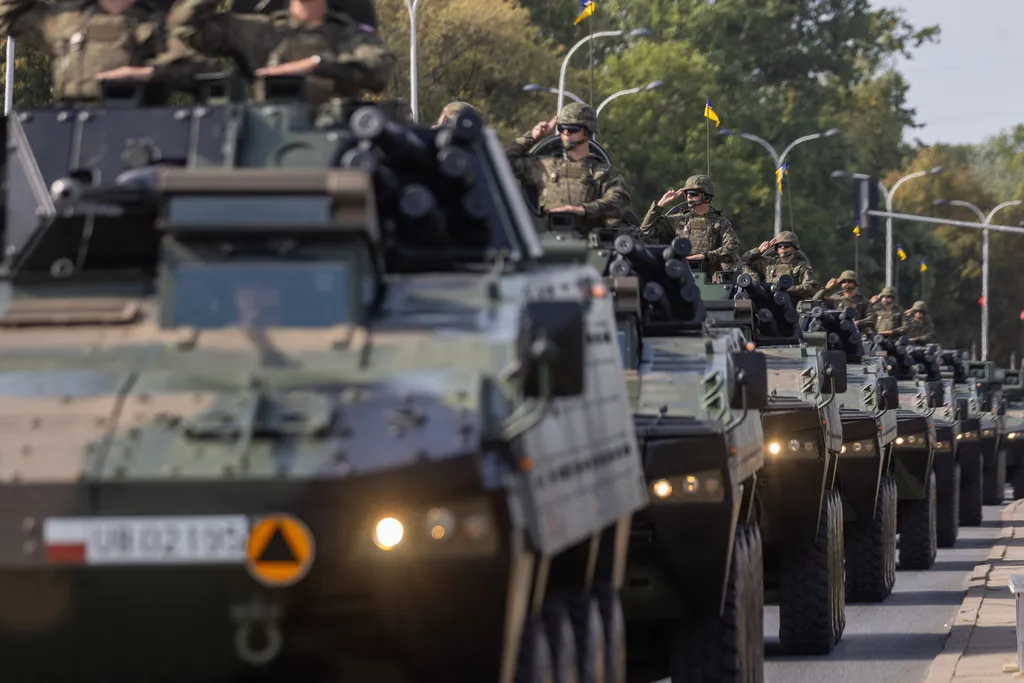
Poland is deepening its collaboration with U.S.-based defense technology firms, particularly those rooted in Silicon Valley, to advance unmanned systems and artificial intelligence (AI). Concurrently, the country plans to bolster local production of cruise missiles, reflecting a strategic shift in response to the evolving security landscape in Eastern Europe.
Beyond partnerships with innovative tech companies, Poland is also strengthening ties with conventional defense contractors such as Lockheed Martin. Recent acquisitions include fighter jets, main battle tanks, attack helicopters, and missile systems. This diversification is critical as Poland seeks to modernize its military infrastructure amidst heightened regional threats, particularly following Russia’s invasion of Ukraine.
The impact of recent geopolitical developments has prompted the Polish government to significantly escalate defense expenditures. The 2025 military budget is projected to reach an unprecedented 4.7% of GDP, totaling approximately PLN 186.6 billion (around $51.1 billion). This increase in funding underscores Poland’s ambition to rapidly enhance its military capabilities. Moreover, the European Union has allocated approximately €43.7 billion ($50.7 billion) in favorable loans under its Security Action For Europe (SAFE) initiative, further facilitating Poland’s defense procurement efforts.
Poland’s Ministry of National Defence has earmarked substantial resources for modernization efforts in unmanned technologies. Deputy Defence Minister Cezary Tomczyk announced plans to invest at least PLN 15 billion ($3.5 billion) over three years for unmanned systems and anti-drone technologies. Additionally, the recently established AI Implementation Center aims to integrate artificial intelligence into military operations.
On October 27, the Polish Ministry of Defence formalized a letter of intent with Palantir Technologies to deploy AI solutions and enhance cybersecurity across military units. Concurrently, Polish defense consortium PGZ signed a cooperative agreement with Anduril to develop autonomous and missile systems.
Palantir’s contributions include implementing AI and IT solutions for enhanced operational efficiency and addressing the complexities associated with massive data generated by modern warfare. Palantir’s engagement holds the promise of streamlining data analysis, allowing military commanders to interpret essential information effectively.
A memorandum of understanding between PGZ and Anduril signals Polish intentions to advance local manufacturing capabilities. The agreement revolves around the development of a variant of the Barracuda-M medium-range turbojet-powered cruise missile, facilitating the indigenous production of advanced strike capabilities.
The Barracuda range consists of “air-breathing autonomous air vehicles” designed for efficient mass production. This initiative seeks to fortify Poland’s defense industry while also contributing to enhanced strategic autonomy. As highlighted by Brian Moran, Vice President of Anduril Europe, “Collaborating with PGZ to localize Barracuda production exemplifies how allied industries can deliver scalable capabilities to counter aggression.”
Poland’s strategic investments in defense innovation, paired with heightened military and technological partnerships, exemplify its proactive stance against emerging threats. By integrating AI and advanced robotics, while fostering local production capabilities, Poland aims to secure its position as a leading force in regional defense. The collaborative efforts with U.S. tech companies are not only a response to immediate threats but also part of a broader ambition to enhance national defense sovereignty.