
Poland is intensifying its defence cooperation with U.S. tech firms Palantir and Anduril, marking a significant shift in its military strategy as it seeks to bolster its capabilities with unmanned systems, artificial intelligence, and local production of advanced weaponry. This move comes as Poland accelerates its defence spending in response to Russia’s ongoing invasion of Ukraine.
With a 2025 military budget set to reach an unprecedented 4.7% of GDP, amounting to PLN 186.6 billion ($51.1 billion), Poland is positioning itself as a key player in European defence innovation. The European Union has further supported this ambition by allocating €43.7 billion ($50.7 billion) in low-cost loans for Poland’s defence acquisitions under the Security Action For Europe (SAFE) scheme.
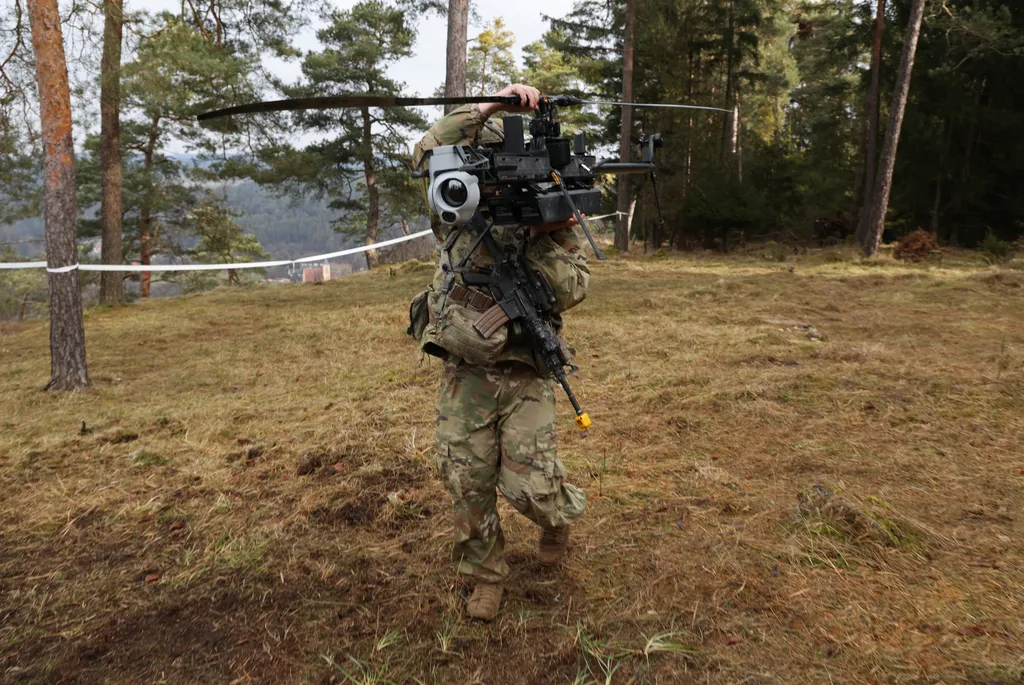
Unmanned technology is a top priority for the Polish Ministry of National Defence. Deputy Defence Minister Cezary Tomczyk recently announced plans to spend at least PLN 15 billion ($3.5 billion) on unmanned systems and anti-drone solutions over the next three years. This investment is part of a broader strategy to integrate AI into Poland’s military operations, as evidenced by the launch of the AI Implementation Center for the Polish armed forces.
On October 27, the Polish Ministry of National Defence signed a letter of intent with Palantir to implement AI, IT, and cybersecurity solutions across its military units. Concurrently, Poland’s state-run defence group, PGZ, inked an agreement with Anduril to collaborate on autonomous and missile systems.
“The modern battlefield and the state-of-the-art combat equipment being introduced into service, combined with sensors, generate enormous amounts of data,” a spokesperson for the Polish ministry told Defense News. “With such a rich data pool, human perception, without automation, is unable to conduct effective analysis.” Palantir’s tools are expected to help commanders navigate this data deluge, ensuring full control over the security of the production environment and integrated information resources.
Palantir CEO and co-founder Alex Karp emphasised the company’s interest in investing in Poland to develop dual-use technologies. The letter of intent with Palantir is seen as a stepping stone for the company’s AI-enabled defence technology to support Poland’s armed forces in an increasingly complex threat environment.
In parallel, Poland is strengthening its partnership with Anduril through PGZ, which supplies the majority of its output to the Polish military. The October 2025 memorandum of understanding between PGZ and Anduril aims to jointly develop and produce a variant of the Barracuda-M medium-range turbojet-powered cruise missile. This collaboration is expected to enhance Poland’s unmanned strike capabilities and bolster the country’s defence industry’s AI expertise.
Anduril’s Barracuda range, described as “air-breathing autonomous air vehicles,” is designed for hyper-scale production and mass employment. Brian Moran, Vice President of Anduril Europe, highlighted the strategic importance of this partnership: “Working with PGZ to localize production of the Barracuda demonstrates how allied industry and sovereign suppliers can deliver rapidly scalable, affordable capability to deter aggression.”
As Poland continues to expand its defence capabilities, its collaboration with Palantir and Anduril underscores a broader trend in European defence strategy—leveraging cutting-edge technology to address evolving security challenges. This partnership not only strengthens Poland’s military readiness but also positions the country as a leader in defence innovation within Europe.