
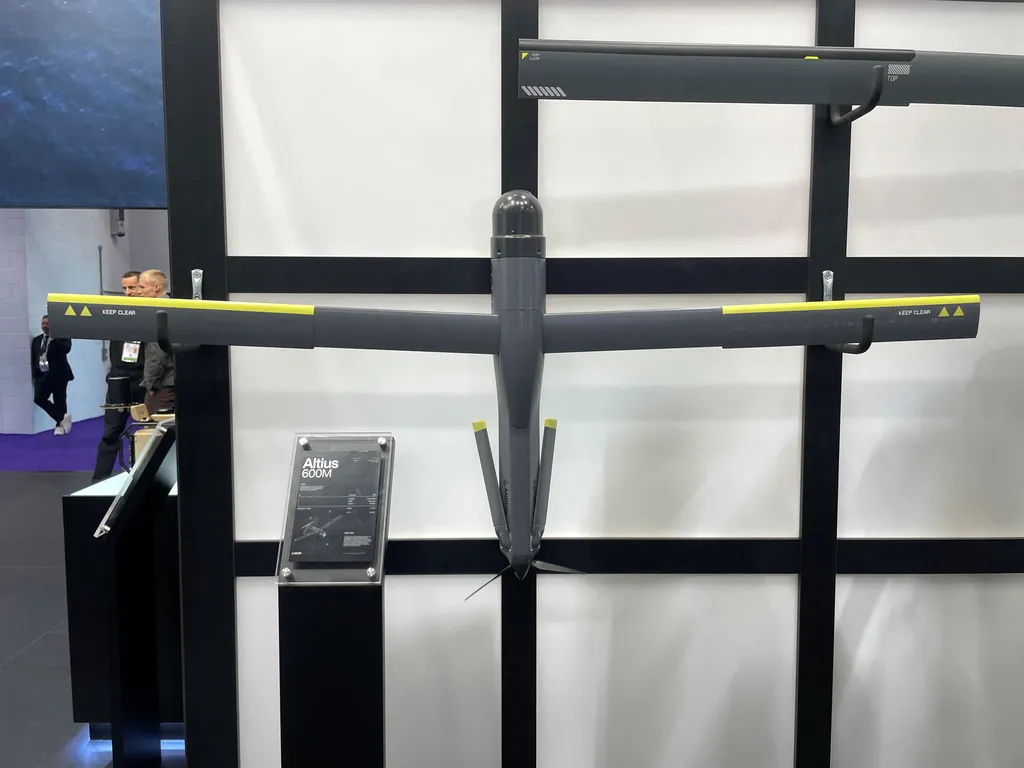
A recent series of setbacks for Anduril Industries, a Silicon Valley defence tech giant, has cast a spotlight on the challenges of integrating cutting-edge drone technology into modern warfare. Despite its rapid valuation growth and ambitious claims, Anduril’s recent test failures and battlefield struggles highlight the gap between innovation and operational readiness.
Earlier this month, two Altius drones, a winged model developed by Anduril, nosedived during U.S. Air Force tests at Eglin Air Force Base in Florida. According to an Air Force test summary, one drone plummeted 8,000 feet to the ground, followed by a second drone spiralling out of control during a separate test. These incidents, previously undisclosed, raise questions about the reliability and battlefield readiness of Anduril’s technology.
Anduril has positioned itself as a key player in the defence sector, with its Altius drone touted as a versatile tool for surveillance and strike missions. The company claims the drone can launch from ground, air, or sea and offers long-range capabilities. Despite these assertions, the recent test failures and operational issues in Ukraine suggest a more complex reality.
Palmer Luckey, Anduril’s 33-year-old founder, has been vocal about the drone’s success, stating that Altius drones have “taken out hundreds of millions of dollars worth of Russian targets.” However, the company’s claims are met with skepticism as Western drone makers, including Anduril, have had limited impact on the Ukrainian battlefield. Mykhailo Fedorov, a deputy prime minister of Ukraine, noted in November 2024 that out of one million drones deployed to the front lines, 96% were Ukrainian-made.
Shannon Prior, an Anduril spokesperson, defended the company’s testing process, describing the incidents as “isolated examples” across hundreds of tests. She emphasised that test failures are a natural part of development, stating, “We are constantly proving out new capabilities for all of our systems, pushing them to the limit so that we can learn, iterate, and improve our systems.”
Anduril’s challenges extend beyond the Altius drone. The company’s Ghost drone program has also faced setbacks, particularly in Ukraine. Early models struggled with Russian electronic warfare, frustrating Ukrainian soldiers. Anduril spokesperson Prior acknowledged these issues, noting that the company has since updated the Ghost drone to address these problems. However, recent tests, including a video showing a Ghost model spinning out of control before crash-landing, continue to raise concerns.
Despite these setbacks, Anduril remains optimistic about its future. The company has a rapidly growing portfolio of weapons systems in development, including an autonomous warship co-developed with Hyundai and the “Fury,” a large drone designed to fly alongside manned fighter jets. Palmer Luckey has emphasised the company’s commitment to rapid innovation, stating, “We’re going to move fast, build what works and get it into the hands of the people who need it.”
The broader defence industry faces a significant challenge: adapting to a battlefield where cheap, mass-produced drones have become central to modern warfare. Anduril’s setbacks underscore the need for continued innovation and rigorous testing to ensure that new technologies meet the demands of real-world combat.
As the defence sector evolves, the lessons learned from Anduril’s experiences will be crucial in shaping the future of military technology. The company’s ability to adapt and improve its systems will be a key factor in its success and the broader adoption of advanced drone technology in defence strategies.