
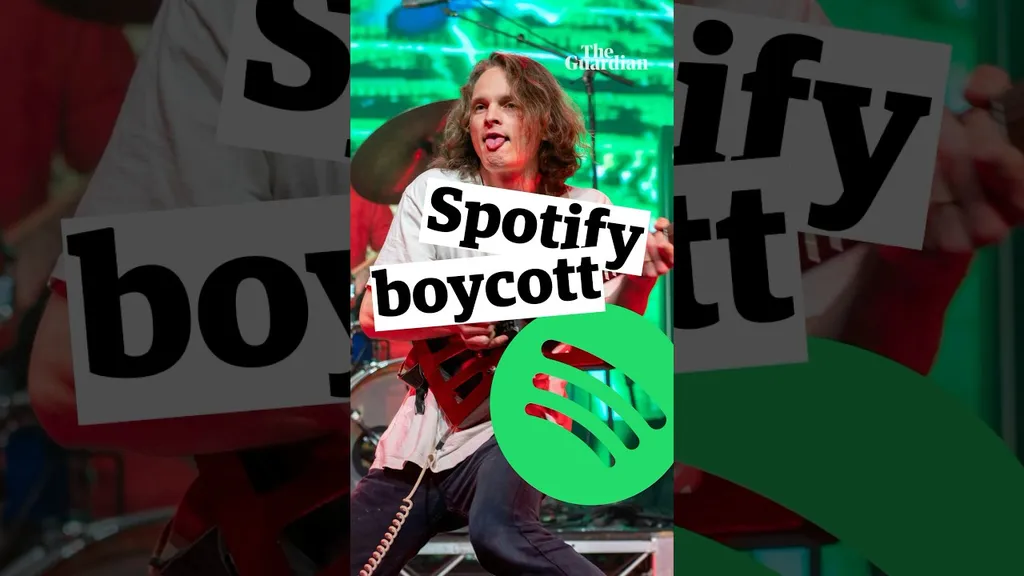
The recent artist-led boycott of Spotify, fueled by CEO Daniel Ek’s investment in the German AI defence company Helsing, has been marked by confusion and misinformation. The controversy has led to a complex narrative that incorrectly links Helsing’s technology to the ongoing conflict in Gaza, despite clarifications from both Helsing and Spotify.
At the heart of the issue is Daniel Ek, the co-founder and outgoing CEO of Spotify, who also chairs Prima Materia, an investment firm that has backed Helsing. Prima Materia led a significant funding round for Helsing in June 2025, raising €600 million and boosting the company’s valuation to $12 billion. Helsing specializes in developing aerial and underwater drones, as well as AI software for weapons systems.
The boycott gained momentum as artists, including Massive Attack and Xiu Xiu, expressed their opposition to their music being used to fund what they described as “lethal, dystopian technologies.” The confusion arose when these artists intertwined their statements about the boycott with their support for the ‘No Music for Genocide’ initiative, which calls for the removal of music from the Israeli market. This blending of messages led to the false impression that Helsing’s technology was being used in Israel, particularly in the context of the war in Gaza.
Massive Attack, in a statement on Instagram, highlighted the “moral and ethical burden” of their music funding such technologies, while also referencing the ‘No Music for Genocide’ initiative. Similarly, Xiu Xiu called for their music to be removed from Spotify, describing it as a “garbage hole violent armageddon portal.” Both statements contributed to the spread of misinformation linking Helsing to operations in Israel.
The confusion extended beyond the music industry. In Spain, activists sprayed red paint on an FC Barcelona shop to protest the football club’s sponsorship with Spotify, falsely claiming that the company’s CEO was financing weapons used by Israel. This misinformation persisted despite Helsing’s statement clarifying that its technology is solely used for the defence of Ukraine and is not exported to Israel.
Spotify has also sought to distance itself from the controversy, with an official spokesperson clarifying that Spotify and Helsing are entirely separate entities. Despite these clarifications, the misinformation has continued to circulate, particularly on social media, where calls to action are often condensed into brief posts.
The boycott has also resonated with consumers, many of whom have cancelled their Spotify subscriptions in protest. The broader implications of this boycott highlight the challenges of separating business investments from public perception, especially in the context of global conflicts and ethical concerns.
As the discourse around this issue continues to evolve, it underscores the need for clear communication and accurate information. The mixed messaging has not only fueled the boycott but also highlighted the complexities of modern activism and the interconnected nature of global business and defence industries.