
In an era where the global security landscape is rapidly evolving, defence technology has transitioned from being a marginalised “sensitive area” to a core growth driver for global capital revaluation. This shift, often referred to as the “re-industrialisation of defence technology,” is being significantly propelled by family offices—private capital entities known for their flexibility, patience, and risk tolerance. Notably, family offices in Europe and the United States, particularly in Central and Eastern Europe and the UK, are increasingly investing in dual-use and defence technologies, albeit often without public announcements.
The Porsche-Piëch family exemplifies this trend. In 2021, they ventured into dual-use aerospace by investing in Isar Aerospace, a German rocket company. This was followed by a 2024 investment in Quantum-Systems, a dual-use drone company. The family’s momentum accelerated in 2025, with a series of strategic moves: considering a third long-term investment in defence and infrastructure, additional funding for Quantum-Systems, launching a “Defence Day,” and discussing a 500 million euro defence fund with Deutsche Telekom. By November, they emphasised the long-term potential of technologies like satellite monitoring, reconnaissance systems, cybersecurity, and logistics.
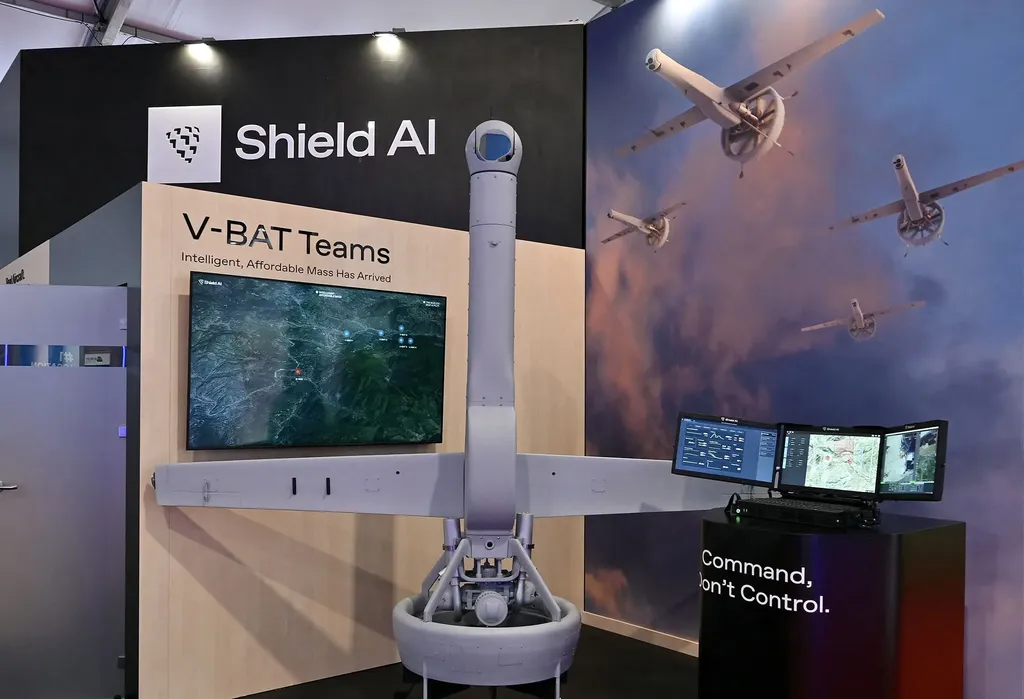
Daniel Ek, co-founder of Spotify, through his family office Prima Materia, invested in Helsing, a German military AI company, making it Europe’s most highly valued defence technology unicorn. Similarly, the Michels family in Wisconsin, with a net worth of about $7 billion, has significantly increased its investment in defence technology, focusing on areas like autonomous fighter jets and anti-drone systems. Their first direct investment in this sector was in Shield AI in 2021.
The market performance of defence technology has been a significant driver of this capital influx. Traditional military giants have led the charge, with the European all-market aerospace and defence index rising by about 53% this year, far outpacing the Euro Stoxx 50 index. The US Aerospace and Defense ETF also saw a 37.34% increase from the beginning of the year to November 21. Europe, in particular, has been a standout region, with the MSCI Europe Aerospace and Defense Index rising 73% in the past 12 months.
Venture capital activities in defence technology have also surged. According to PitchBook data, in the second quarter of 2025, the financing of defence technology startups exceeded $19 billion, a year-on-year increase of 200%. This enthusiasm has extended to a broader range of defence technologies, including unmanned maritime systems, autonomous aircraft, and directed-energy weapons. Sequoia Capital’s investment in the German drone company Stark is seen as a sign that venture capital has officially included defence technology in the mainstream deep-technology track.
European and American family offices and high-net-worth individuals, due to their flexible decision-making and short approval chains, have been the earliest private investment forces in the defence technology sector. Deloitte estimates that the number of European family offices has exceeded 2,000, with those in Central and Eastern Europe, the UK, and the United States being particularly active. These family offices play a crucial role in the later stages of defence technology investments due to their independent and fast decision-making, low public scrutiny pressure, long-term investment horizon, adequate capital scale, and mission-driven approach.
As the global security landscape continues to evolve, the role of family offices in driving the defence technology sector will likely become even more pronounced. Their unique advantages and strategic investments are not only reshaping the industry but also positioning defence technology as a key asset class in the global capital market.