
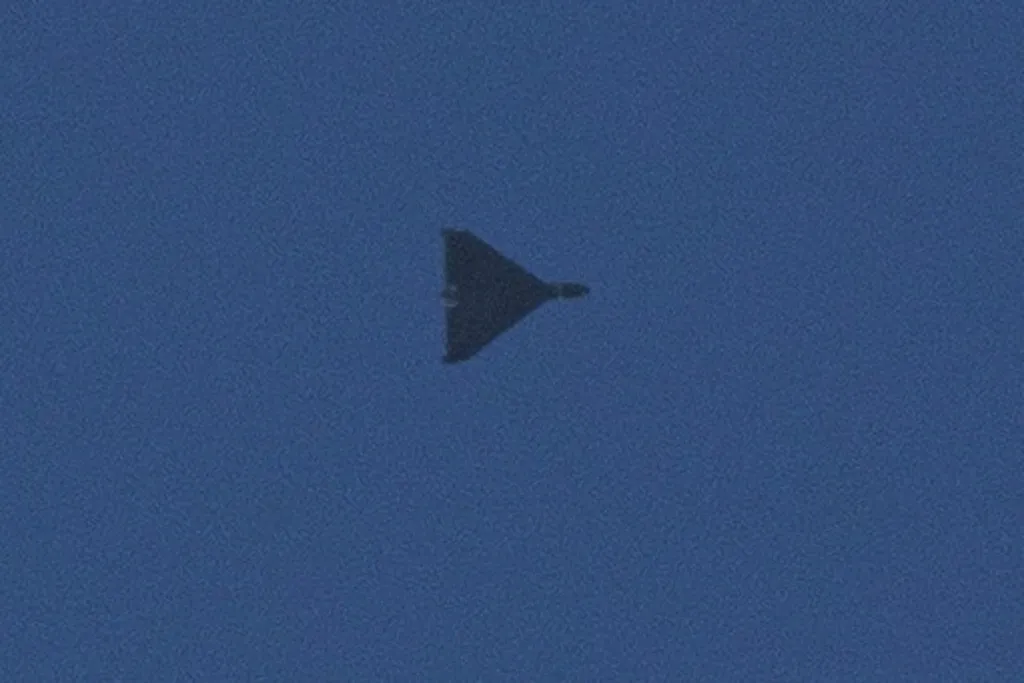
In the rapidly evolving landscape of military technology, Russia has made significant strides in the development and deployment of unmanned aerial vehicles (UAVs) and related systems. The latest advancements, showcased at the Dubai Airshow 2025 and observed on the frontlines, highlight a strategic push towards enhancing both reconnaissance and strike capabilities. These developments are reshaping the dynamics of modern warfare and underscoring the critical role of drones in contemporary military operations.
A New Generation of Shahed Drones
One of the most notable developments is the emergence of a new variant of the Shahed 107 drone, which has been spotted in frontline regions. According to analyst Serhii “Flash” Beskrestnov, this UAV carries an 8–9 kg warhead and is powered by an internal combustion piston engine, with an estimated range of 500–800 km. Manufactured in Iran in 2024, the Shahed 107 represents an attempt to address the growing demand for mid-strike segment UAVs. Beskrestnov speculates that Russia may soon begin producing this drone domestically to bolster its UAV fleet and meet operational needs.
Innovations at the Dubai Airshow 2025
The Dubai Airshow 2025 provided a platform for Russia to unveil several cutting-edge advancements in its military technology portfolio. Among the highlights was the Supercam S180 reconnaissance UAV, which boasts a short-term boost mode that allegedly makes it “unreachable for anti-air drones.” The S180 can remain airborne for up to two hours, offers enhanced speed compared to its predecessor, the S350, and is equipped with video cameras and thermal imagers. Its low-noise electric motor, increased payload capacity, and ability to operate in extreme temperatures and wind conditions further enhance its operational versatility.
Another significant announcement was the Supercam X4 quadcopter, designed to drop explosive and fragmentation munitions weighing 0.5 kg. This drone has undergone testing in exercises in Belarus and in combat zones on Ukrainian territory, demonstrating its effectiveness in real-world scenarios.
ZALA, a prominent player in the Russian UAV market, announced a doubling of the range of its loitering munitions, the 51E and 52E models, better known as the Lancet. The updated models now have an operating range of up to 45 km and can stay airborne for up to 50 minutes. The range of the 52-series modifications has increased to 35 km, with flight time extended to 30 minutes. Additionally, the ZALA T-20 unmanned aviation system, used for monitoring energy, oil, and gas infrastructure, has increased its endurance to seven hours and can cover up to 500 kilometres in a single flight.
The Pantsir modification, designated SMD-E, was also showcased at the exhibition. This configuration, which carries only missiles and omits anti-aircraft guns, is positioned as a counter to swarms of small UAVs. The missile component is designed to engage large numbers of small targets at varying distances, highlighting Russia’s focus on developing multi-layered defence systems.
The Sekira Prizraka Droneport
Kingpro, a Russian company, unveiled the Sekira Prizraka droneport, a novel system that combines the multirotor Sekira drone and the fixed-wing Prizrak UAV. The multirotor lifts the fixed-wing drone into the air, after which it launches directly from altitude. This approach saves up to 20% of the energy normally spent on ground take-off and increases launch safety. The airborne droneport also acts as a relay, extending the operational range to up to 120 km and enabling the carriage of a warhead of up to three kilograms.
Unmanned Boat for Drone Deployment
Russian scientists have announced the creation of an unmanned boat equipped with a launch system and compartments for storing and deploying UAVs. This low-observable drone-carrier boat is designed to launch up to four fixed-wing drones. The hull is covered with a lightweight radar-absorbing mesh, which reportedly reduces its radar visibility fourfold. While there is currently no documentary evidence of the technology’s effectiveness or technical specifications, this development underscores Russia’s commitment to integrating UAVs into naval operations.
Enhanced Capabilities for the Orion UAV
ArmyRecognition has published new images of the Russian strike-reconnaissance UAV Orion, showing two Kh-BPLA missiles mounted under the wing. This expansion of its precision-strike capability indicates a growing emphasis on versatility and firepower in modern UAVs. The Kh-BPLA missile, based on the 9M133 Kornet design, uses laser guidance similar to